Potato vs Rice in Dog Food: Cost, Processing, and Nutrition
Potato vs Rice in Dog Food: Cost, Processing, and Nutrition
Potato vs Rice in Dog Food: Cost, Processing, and Nutrition
Summary
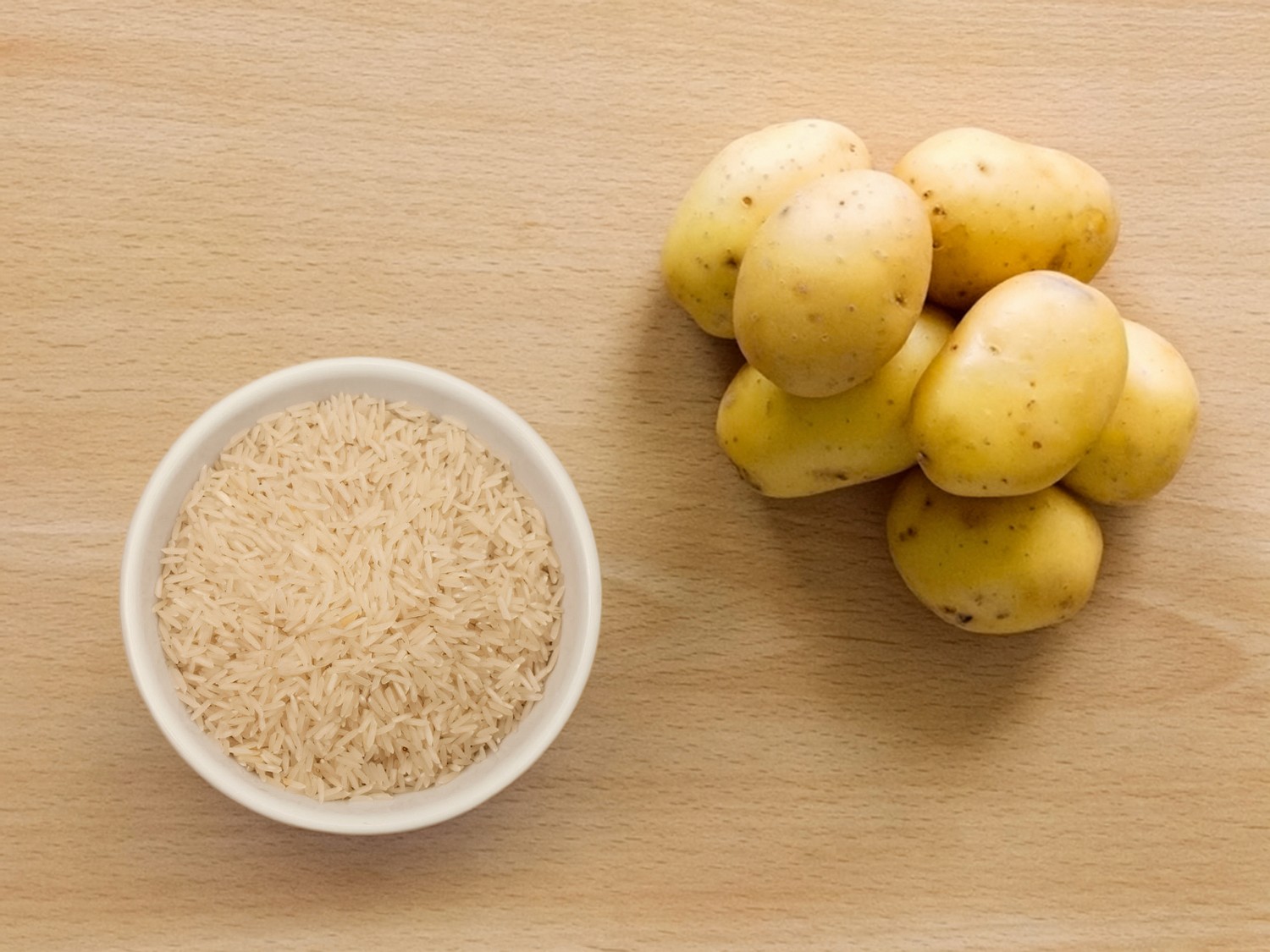
Potato and rice are both acceptable carbohydrate sources in dog food, and the choice between them usually affects cost and processing more than basic nutrition.
Both ingredients provide highly digestible energy when properly cooked, while differing modestly in fiber type, micronutrients, and glycemic impact.
Grain-free potato-based recipes are often significantly more expensive because potatoes are harder and more energy-intensive to process at scale, not because they are inherently superior.
For most healthy dogs, the proportion and quality of animal ingredients, amino acid balance, and gentle processing matter far more than whether the label lists potato or rice.
Owners should prioritize transparent meat inclusion, appropriate protein and fat levels, and controlled starch content over marketing logos such as “grain free.”
Why carbohydrates are used in dog food
Dogs are physiologically carnivorous but they have been shown to efficiently digest cooked starch, which allows formulators to use carbohydrates as a compact, affordable energy source in complete diets.
Carbohydrates help create kibble structure, control texture, and reduce formula cost compared with diets that rely only on animal fats and proteins for calories, so they are widely used even though they are not strictly essential nutrients.
Potato as an ingredient
Potatoes, when properly cooked, provide highly digestible starch along with some vitamin C, B-vitamins, potassium, and fiber, but they contribute very little protein or essential fatty acids.
Raw potatoes contain glycoalkaloids such as solanine, which is why they must be thoroughly cooked and processed before inclusion in dog food to ensure safety and good digestibility.
Rice as an ingredient
Rice, particularly white rice, is a refined cereal grain that offers easily digestible starch, small amounts of protein, some B-vitamins, and trace minerals when cooked.
Because of its consistent behavior in extrusion and predictable particle size, rice is considered a technologically easy carbohydrate for kibble manufacture and is therefore common in both commercial and veterinary therapeutic diets.
Nutrient profile comparison
On a dry-matter basis, both cooked potato and rice are dominated by starch and contain modest levels of fiber and micronutrients, which means neither ingredient alone can satisfy canine requirements for amino acids, fats, vitamins, or minerals.
In practical formulations, differences in micronutrient content between potato and rice are usually overshadowed by contributions from animal organs, added vitamin–mineral premixes, and overall recipe design.
Digestibility in dogs
Controlled studies show that both properly cooked rice and properly cooked potato can achieve high apparent total tract digestibility in dogs when extrusion and moisture conditions are optimized.
Because potato and rice starches gelatinize at different temperatures and water contents, factories must tune their cooking conditions carefully, but well-managed processes can deliver good stool quality and energy utilization with either ingredient.
Glycemic response and energy
White rice tends to produce a relatively rapid post-prandial blood glucose rise in dogs, whereas the glycemic effect of potatoes can vary depending on processing, particle size, and the amount of resistant starch created during cooling.
For most healthy adult dogs, these differences rarely translate into clear clinical consequences when the whole diet is balanced and calorie intake matches energy expenditure, but they may matter for dogs with obesity, insulin resistance, or specific endocrine disorders.
Fiber and stool quality
Potatoes supply both soluble and insoluble fiber fractions from their cell walls and may provide some resistant starch that behaves like fermentable fiber, which can support beneficial colonic bacteria but may increase gas or loosen stools if overused.
White rice is relatively low in fiber, which can contribute to firmer stools and is one reason why simple chicken-and-rice combinations are often used short term in gastrointestinal recovery protocols.
Processing realities in factories
From a manufacturing perspective, potatoes are demanding because they often need peeling, pre-cooking, cooling, and careful size reduction to avoid gummy slurries that clog or slow extrusion equipment.
Rice generally arrives as a uniform, dry ingredient that can be milled and dosed consistently into the extruder with minimal pre-treatment, which translates into shorter processing times, less energy use, and lower scrap rates.
How processing drives price differences
Because raw potatoes and rice can cost similar amounts as commodities, the main cost divergence appears inside the plant, where extra cooking steps, cooling, and line slow-downs associated with potato-heavy recipes raise the manufacturing cost per kilogram.
When brands market grain-free, potato-based formulas, that higher processing cost is typically passed through the value chain, so consumers may pay substantially more for a diet whose nutritional quality is not automatically superior to a comparable rice-based recipe.
Grain-free labels and perception
Grain-free labelling emerged as a powerful marketing term, suggesting that such diets are closer to a natural canine diet even though domestic dogs have adapted genetically and metabolically to utilize cooked starch.
Many grain-free recipes simply replace rice or other grains with potatoes, peas, or lentils at similar or higher inclusion levels, so the logo alone says nothing about meat inclusion, amino acid balance, or micronutrient adequacy.
When potato might be preferred
A small percentage of dogs appear to have adverse reactions to specific cereal proteins, and in these cases a potato-based elimination or limited-ingredient diet under veterinary supervision can be useful as part of diagnosing food-responsive disease.
In such scenarios, potato functions as a relatively uncommon or novel carbohydrate source that reduces exposure to suspected grain allergens while the clinician evaluates clinical response.
When rice might be preferred
Rice-based diets can be valuable in certain therapeutic contexts where predictable digestibility and stool consistency are high priorities, such as low-fat, highly digestible formulations for dogs with some gastrointestinal or pancreatic disorders.
The long history of rice use in both human and veterinary nutrition provides formulators and clinicians with extensive data on its safety and functionality, which is one reason it frequently appears in prescription diets.
What matters more than potato vs rice
Across large numbers of diets, health outcomes in dogs are driven more by the quality and quantity of animal-derived protein, amino acid balance, appropriate fat type and level, and compliance with established nutrient profiles than by the specific choice of potato or rice.
A diet that uses either ingredient modestly to support a high share of meat will almost always outperform one that relies heavily on any starch source to dilute animal protein, regardless of whether the label emphasizes grains or grain-free positioning.
Evaluating a formula on the label
When comparing products, it is more informative to look past front-of-bag messages and examine whether animal ingredients dominate the first several positions on the ingredient list and whether crude protein is robust for the dog’s life stage.
Multiple starches high in the list combined with only modest protein typically signal a carbohydrate-heavy, cost-optimized formula, whereas a focus on meat, organ ingredients, and sensible fat levels indicates a more nutrient-dense approach.
How Ethelia approaches starch
The Ethelia formulation philosophy is to prioritize animal ingredients and gentle cooking first, then select and limit starch sources to support structure and palatability rather than to chase marketing-driven logos.
This approach aligns with veterinary nutrition principles by aiming for a high share of high-quality animal protein, minimal but functional starch, and controlled processing that helps preserve sensitive nutrients.
Cost allocation: meat vs logo
From a budgeting perspective, pet owners effectively decide whether they want their money to fund higher processing complexity and a grain-free logo or to fund more meat, organ, and functional ingredients inside the bag.
Redirecting the same spend toward a recipe that may include rice or another well-tolerated starch but demonstrably higher animal content and better processing will generally yield more tangible benefits for skin, coat, muscle maintenance, and overall vitality.
Practical checklist for dog owners
For a healthy dog without specific medical indications, potato and rice can both be acceptable carbohydrate sources, so owners should focus first on veterinary guidance, appropriate life-stage formulation, and overall diet quality.
When choosing between products, it is sensible to prioritize clearly stated animal-ingredient levels, adequate protein and fat, controlled and transparent carbohydrate content, and brand transparency over single-ingredient trends or grain-free claims.
Sources
National Research Council (NRC). Nutrient Requirements of Dogs and Cats. National Academies Press; 2006.
Case LP, Daristotle L, Hayek MG, Raasch MF. Canine and Feline Nutrition: A Resource for Companion Animal Professionals. 3rd ed. Elsevier; 2011.
World Small Animal Veterinary Association (WSAVA). Global Nutrition Committee resources and toolkits.
Peer-reviewed studies on carbohydrate digestibility and extrusion processing in dog foods (e.g., van Rooijen C., Bosch G., van der Poel A.F.B., Animal Feed Science and Technology).
Veterinary reviews on grain-free diets, ingredient selection, and cardiomyopathy risk in dogs from major journals and professional bodies.
Summary
Potato and rice are both acceptable carbohydrate sources in dog food, and the choice between them usually affects cost and processing more than basic nutrition.
Both ingredients provide highly digestible energy when properly cooked, while differing modestly in fiber type, micronutrients, and glycemic impact.
Grain-free potato-based recipes are often significantly more expensive because potatoes are harder and more energy-intensive to process at scale, not because they are inherently superior.
For most healthy dogs, the proportion and quality of animal ingredients, amino acid balance, and gentle processing matter far more than whether the label lists potato or rice.
Owners should prioritize transparent meat inclusion, appropriate protein and fat levels, and controlled starch content over marketing logos such as “grain free.”
Why carbohydrates are used in dog food
Dogs are physiologically carnivorous but they have been shown to efficiently digest cooked starch, which allows formulators to use carbohydrates as a compact, affordable energy source in complete diets.
Carbohydrates help create kibble structure, control texture, and reduce formula cost compared with diets that rely only on animal fats and proteins for calories, so they are widely used even though they are not strictly essential nutrients.
Potato as an ingredient
Potatoes, when properly cooked, provide highly digestible starch along with some vitamin C, B-vitamins, potassium, and fiber, but they contribute very little protein or essential fatty acids.
Raw potatoes contain glycoalkaloids such as solanine, which is why they must be thoroughly cooked and processed before inclusion in dog food to ensure safety and good digestibility.
Rice as an ingredient
Rice, particularly white rice, is a refined cereal grain that offers easily digestible starch, small amounts of protein, some B-vitamins, and trace minerals when cooked.
Because of its consistent behavior in extrusion and predictable particle size, rice is considered a technologically easy carbohydrate for kibble manufacture and is therefore common in both commercial and veterinary therapeutic diets.
Nutrient profile comparison
On a dry-matter basis, both cooked potato and rice are dominated by starch and contain modest levels of fiber and micronutrients, which means neither ingredient alone can satisfy canine requirements for amino acids, fats, vitamins, or minerals.
In practical formulations, differences in micronutrient content between potato and rice are usually overshadowed by contributions from animal organs, added vitamin–mineral premixes, and overall recipe design.
Digestibility in dogs
Controlled studies show that both properly cooked rice and properly cooked potato can achieve high apparent total tract digestibility in dogs when extrusion and moisture conditions are optimized.
Because potato and rice starches gelatinize at different temperatures and water contents, factories must tune their cooking conditions carefully, but well-managed processes can deliver good stool quality and energy utilization with either ingredient.
Glycemic response and energy
White rice tends to produce a relatively rapid post-prandial blood glucose rise in dogs, whereas the glycemic effect of potatoes can vary depending on processing, particle size, and the amount of resistant starch created during cooling.
For most healthy adult dogs, these differences rarely translate into clear clinical consequences when the whole diet is balanced and calorie intake matches energy expenditure, but they may matter for dogs with obesity, insulin resistance, or specific endocrine disorders.
Fiber and stool quality
Potatoes supply both soluble and insoluble fiber fractions from their cell walls and may provide some resistant starch that behaves like fermentable fiber, which can support beneficial colonic bacteria but may increase gas or loosen stools if overused.
White rice is relatively low in fiber, which can contribute to firmer stools and is one reason why simple chicken-and-rice combinations are often used short term in gastrointestinal recovery protocols.
Processing realities in factories
From a manufacturing perspective, potatoes are demanding because they often need peeling, pre-cooking, cooling, and careful size reduction to avoid gummy slurries that clog or slow extrusion equipment.
Rice generally arrives as a uniform, dry ingredient that can be milled and dosed consistently into the extruder with minimal pre-treatment, which translates into shorter processing times, less energy use, and lower scrap rates.
How processing drives price differences
Because raw potatoes and rice can cost similar amounts as commodities, the main cost divergence appears inside the plant, where extra cooking steps, cooling, and line slow-downs associated with potato-heavy recipes raise the manufacturing cost per kilogram.
When brands market grain-free, potato-based formulas, that higher processing cost is typically passed through the value chain, so consumers may pay substantially more for a diet whose nutritional quality is not automatically superior to a comparable rice-based recipe.
Grain-free labels and perception
Grain-free labelling emerged as a powerful marketing term, suggesting that such diets are closer to a natural canine diet even though domestic dogs have adapted genetically and metabolically to utilize cooked starch.
Many grain-free recipes simply replace rice or other grains with potatoes, peas, or lentils at similar or higher inclusion levels, so the logo alone says nothing about meat inclusion, amino acid balance, or micronutrient adequacy.
When potato might be preferred
A small percentage of dogs appear to have adverse reactions to specific cereal proteins, and in these cases a potato-based elimination or limited-ingredient diet under veterinary supervision can be useful as part of diagnosing food-responsive disease.
In such scenarios, potato functions as a relatively uncommon or novel carbohydrate source that reduces exposure to suspected grain allergens while the clinician evaluates clinical response.
When rice might be preferred
Rice-based diets can be valuable in certain therapeutic contexts where predictable digestibility and stool consistency are high priorities, such as low-fat, highly digestible formulations for dogs with some gastrointestinal or pancreatic disorders.
The long history of rice use in both human and veterinary nutrition provides formulators and clinicians with extensive data on its safety and functionality, which is one reason it frequently appears in prescription diets.
What matters more than potato vs rice
Across large numbers of diets, health outcomes in dogs are driven more by the quality and quantity of animal-derived protein, amino acid balance, appropriate fat type and level, and compliance with established nutrient profiles than by the specific choice of potato or rice.
A diet that uses either ingredient modestly to support a high share of meat will almost always outperform one that relies heavily on any starch source to dilute animal protein, regardless of whether the label emphasizes grains or grain-free positioning.
Evaluating a formula on the label
When comparing products, it is more informative to look past front-of-bag messages and examine whether animal ingredients dominate the first several positions on the ingredient list and whether crude protein is robust for the dog’s life stage.
Multiple starches high in the list combined with only modest protein typically signal a carbohydrate-heavy, cost-optimized formula, whereas a focus on meat, organ ingredients, and sensible fat levels indicates a more nutrient-dense approach.
How Ethelia approaches starch
The Ethelia formulation philosophy is to prioritize animal ingredients and gentle cooking first, then select and limit starch sources to support structure and palatability rather than to chase marketing-driven logos.
This approach aligns with veterinary nutrition principles by aiming for a high share of high-quality animal protein, minimal but functional starch, and controlled processing that helps preserve sensitive nutrients.
Cost allocation: meat vs logo
From a budgeting perspective, pet owners effectively decide whether they want their money to fund higher processing complexity and a grain-free logo or to fund more meat, organ, and functional ingredients inside the bag.
Redirecting the same spend toward a recipe that may include rice or another well-tolerated starch but demonstrably higher animal content and better processing will generally yield more tangible benefits for skin, coat, muscle maintenance, and overall vitality.
Practical checklist for dog owners
For a healthy dog without specific medical indications, potato and rice can both be acceptable carbohydrate sources, so owners should focus first on veterinary guidance, appropriate life-stage formulation, and overall diet quality.
When choosing between products, it is sensible to prioritize clearly stated animal-ingredient levels, adequate protein and fat, controlled and transparent carbohydrate content, and brand transparency over single-ingredient trends or grain-free claims.
Sources
National Research Council (NRC). Nutrient Requirements of Dogs and Cats. National Academies Press; 2006.
Case LP, Daristotle L, Hayek MG, Raasch MF. Canine and Feline Nutrition: A Resource for Companion Animal Professionals. 3rd ed. Elsevier; 2011.
World Small Animal Veterinary Association (WSAVA). Global Nutrition Committee resources and toolkits.
Peer-reviewed studies on carbohydrate digestibility and extrusion processing in dog foods (e.g., van Rooijen C., Bosch G., van der Poel A.F.B., Animal Feed Science and Technology).
Veterinary reviews on grain-free diets, ingredient selection, and cardiomyopathy risk in dogs from major journals and professional bodies.
Summary
Potato and rice are both acceptable carbohydrate sources in dog food, and the choice between them usually affects cost and processing more than basic nutrition.
Both ingredients provide highly digestible energy when properly cooked, while differing modestly in fiber type, micronutrients, and glycemic impact.
Grain-free potato-based recipes are often significantly more expensive because potatoes are harder and more energy-intensive to process at scale, not because they are inherently superior.
For most healthy dogs, the proportion and quality of animal ingredients, amino acid balance, and gentle processing matter far more than whether the label lists potato or rice.
Owners should prioritize transparent meat inclusion, appropriate protein and fat levels, and controlled starch content over marketing logos such as “grain free.”
Why carbohydrates are used in dog food
Dogs are physiologically carnivorous but they have been shown to efficiently digest cooked starch, which allows formulators to use carbohydrates as a compact, affordable energy source in complete diets.
Carbohydrates help create kibble structure, control texture, and reduce formula cost compared with diets that rely only on animal fats and proteins for calories, so they are widely used even though they are not strictly essential nutrients.
Potato as an ingredient
Potatoes, when properly cooked, provide highly digestible starch along with some vitamin C, B-vitamins, potassium, and fiber, but they contribute very little protein or essential fatty acids.
Raw potatoes contain glycoalkaloids such as solanine, which is why they must be thoroughly cooked and processed before inclusion in dog food to ensure safety and good digestibility.
Rice as an ingredient
Rice, particularly white rice, is a refined cereal grain that offers easily digestible starch, small amounts of protein, some B-vitamins, and trace minerals when cooked.
Because of its consistent behavior in extrusion and predictable particle size, rice is considered a technologically easy carbohydrate for kibble manufacture and is therefore common in both commercial and veterinary therapeutic diets.
Nutrient profile comparison
On a dry-matter basis, both cooked potato and rice are dominated by starch and contain modest levels of fiber and micronutrients, which means neither ingredient alone can satisfy canine requirements for amino acids, fats, vitamins, or minerals.
In practical formulations, differences in micronutrient content between potato and rice are usually overshadowed by contributions from animal organs, added vitamin–mineral premixes, and overall recipe design.
Digestibility in dogs
Controlled studies show that both properly cooked rice and properly cooked potato can achieve high apparent total tract digestibility in dogs when extrusion and moisture conditions are optimized.
Because potato and rice starches gelatinize at different temperatures and water contents, factories must tune their cooking conditions carefully, but well-managed processes can deliver good stool quality and energy utilization with either ingredient.
Glycemic response and energy
White rice tends to produce a relatively rapid post-prandial blood glucose rise in dogs, whereas the glycemic effect of potatoes can vary depending on processing, particle size, and the amount of resistant starch created during cooling.
For most healthy adult dogs, these differences rarely translate into clear clinical consequences when the whole diet is balanced and calorie intake matches energy expenditure, but they may matter for dogs with obesity, insulin resistance, or specific endocrine disorders.
Fiber and stool quality
Potatoes supply both soluble and insoluble fiber fractions from their cell walls and may provide some resistant starch that behaves like fermentable fiber, which can support beneficial colonic bacteria but may increase gas or loosen stools if overused.
White rice is relatively low in fiber, which can contribute to firmer stools and is one reason why simple chicken-and-rice combinations are often used short term in gastrointestinal recovery protocols.
Processing realities in factories
From a manufacturing perspective, potatoes are demanding because they often need peeling, pre-cooking, cooling, and careful size reduction to avoid gummy slurries that clog or slow extrusion equipment.
Rice generally arrives as a uniform, dry ingredient that can be milled and dosed consistently into the extruder with minimal pre-treatment, which translates into shorter processing times, less energy use, and lower scrap rates.
How processing drives price differences
Because raw potatoes and rice can cost similar amounts as commodities, the main cost divergence appears inside the plant, where extra cooking steps, cooling, and line slow-downs associated with potato-heavy recipes raise the manufacturing cost per kilogram.
When brands market grain-free, potato-based formulas, that higher processing cost is typically passed through the value chain, so consumers may pay substantially more for a diet whose nutritional quality is not automatically superior to a comparable rice-based recipe.
Grain-free labels and perception
Grain-free labelling emerged as a powerful marketing term, suggesting that such diets are closer to a natural canine diet even though domestic dogs have adapted genetically and metabolically to utilize cooked starch.
Many grain-free recipes simply replace rice or other grains with potatoes, peas, or lentils at similar or higher inclusion levels, so the logo alone says nothing about meat inclusion, amino acid balance, or micronutrient adequacy.
When potato might be preferred
A small percentage of dogs appear to have adverse reactions to specific cereal proteins, and in these cases a potato-based elimination or limited-ingredient diet under veterinary supervision can be useful as part of diagnosing food-responsive disease.
In such scenarios, potato functions as a relatively uncommon or novel carbohydrate source that reduces exposure to suspected grain allergens while the clinician evaluates clinical response.
When rice might be preferred
Rice-based diets can be valuable in certain therapeutic contexts where predictable digestibility and stool consistency are high priorities, such as low-fat, highly digestible formulations for dogs with some gastrointestinal or pancreatic disorders.
The long history of rice use in both human and veterinary nutrition provides formulators and clinicians with extensive data on its safety and functionality, which is one reason it frequently appears in prescription diets.
What matters more than potato vs rice
Across large numbers of diets, health outcomes in dogs are driven more by the quality and quantity of animal-derived protein, amino acid balance, appropriate fat type and level, and compliance with established nutrient profiles than by the specific choice of potato or rice.
A diet that uses either ingredient modestly to support a high share of meat will almost always outperform one that relies heavily on any starch source to dilute animal protein, regardless of whether the label emphasizes grains or grain-free positioning.
Evaluating a formula on the label
When comparing products, it is more informative to look past front-of-bag messages and examine whether animal ingredients dominate the first several positions on the ingredient list and whether crude protein is robust for the dog’s life stage.
Multiple starches high in the list combined with only modest protein typically signal a carbohydrate-heavy, cost-optimized formula, whereas a focus on meat, organ ingredients, and sensible fat levels indicates a more nutrient-dense approach.
How Ethelia approaches starch
The Ethelia formulation philosophy is to prioritize animal ingredients and gentle cooking first, then select and limit starch sources to support structure and palatability rather than to chase marketing-driven logos.
This approach aligns with veterinary nutrition principles by aiming for a high share of high-quality animal protein, minimal but functional starch, and controlled processing that helps preserve sensitive nutrients.
Cost allocation: meat vs logo
From a budgeting perspective, pet owners effectively decide whether they want their money to fund higher processing complexity and a grain-free logo or to fund more meat, organ, and functional ingredients inside the bag.
Redirecting the same spend toward a recipe that may include rice or another well-tolerated starch but demonstrably higher animal content and better processing will generally yield more tangible benefits for skin, coat, muscle maintenance, and overall vitality.
Practical checklist for dog owners
For a healthy dog without specific medical indications, potato and rice can both be acceptable carbohydrate sources, so owners should focus first on veterinary guidance, appropriate life-stage formulation, and overall diet quality.
When choosing between products, it is sensible to prioritize clearly stated animal-ingredient levels, adequate protein and fat, controlled and transparent carbohydrate content, and brand transparency over single-ingredient trends or grain-free claims.
Sources
National Research Council (NRC). Nutrient Requirements of Dogs and Cats. National Academies Press; 2006.
Case LP, Daristotle L, Hayek MG, Raasch MF. Canine and Feline Nutrition: A Resource for Companion Animal Professionals. 3rd ed. Elsevier; 2011.
World Small Animal Veterinary Association (WSAVA). Global Nutrition Committee resources and toolkits.
Peer-reviewed studies on carbohydrate digestibility and extrusion processing in dog foods (e.g., van Rooijen C., Bosch G., van der Poel A.F.B., Animal Feed Science and Technology).
Veterinary reviews on grain-free diets, ingredient selection, and cardiomyopathy risk in dogs from major journals and professional bodies.




Join Our Newsletter
Sign up for our email list to get exclusive news, annoucements, and promotions.

Join Our Newsletter
Sign up for our email list to get exclusive news, annoucements, and promotions.
Join Our Newsletter
Sign up for our email list to get exclusive news, annoucements, and promotions.
Join Our Newsletter
Sign up for our email list to get exclusive news, annoucements, and promotions.